Climate Interactive 2025: Simulating a Sustainable Future
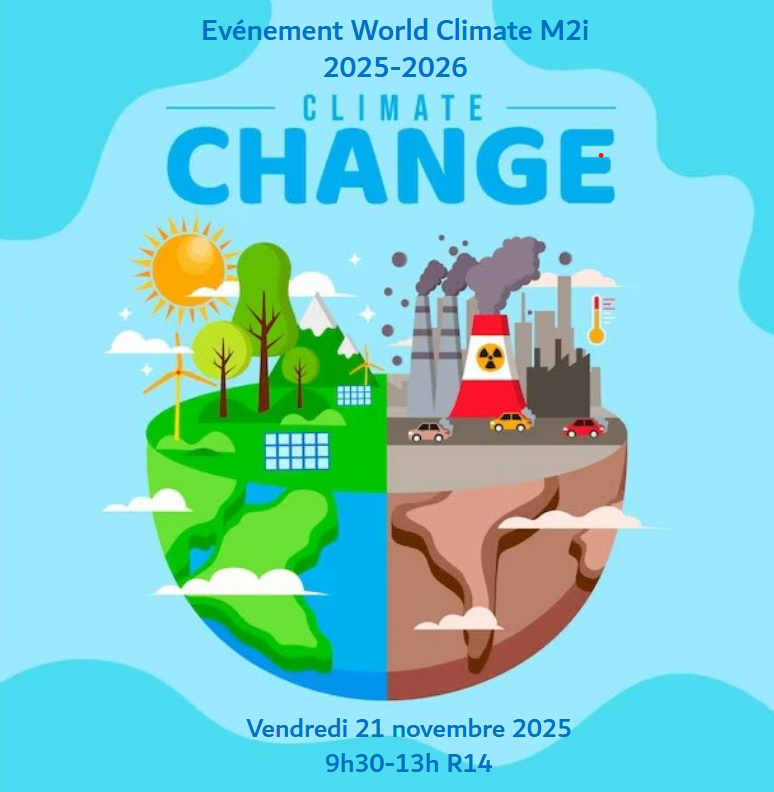
The Climate Interactive 2025 event was, as every year, organized by Mrs. Bénédicte Coestier, an economics professor at Paris Nanterre University.
What is it about?
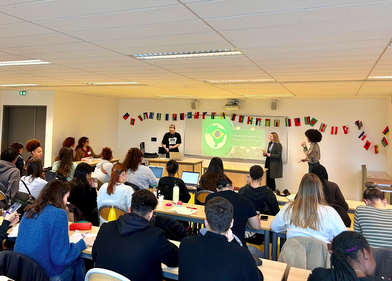
Over the course of five sessions, the second-year M2i master’s students prepared for a role-playing exercise based on several climate-modeling tools. Their objective was to simulate a Conference of the Parties (COP) and negotiate reductions in greenhouse gas emissions in a world currently on track for more than 2°C of warming compared to pre-industrial levels.
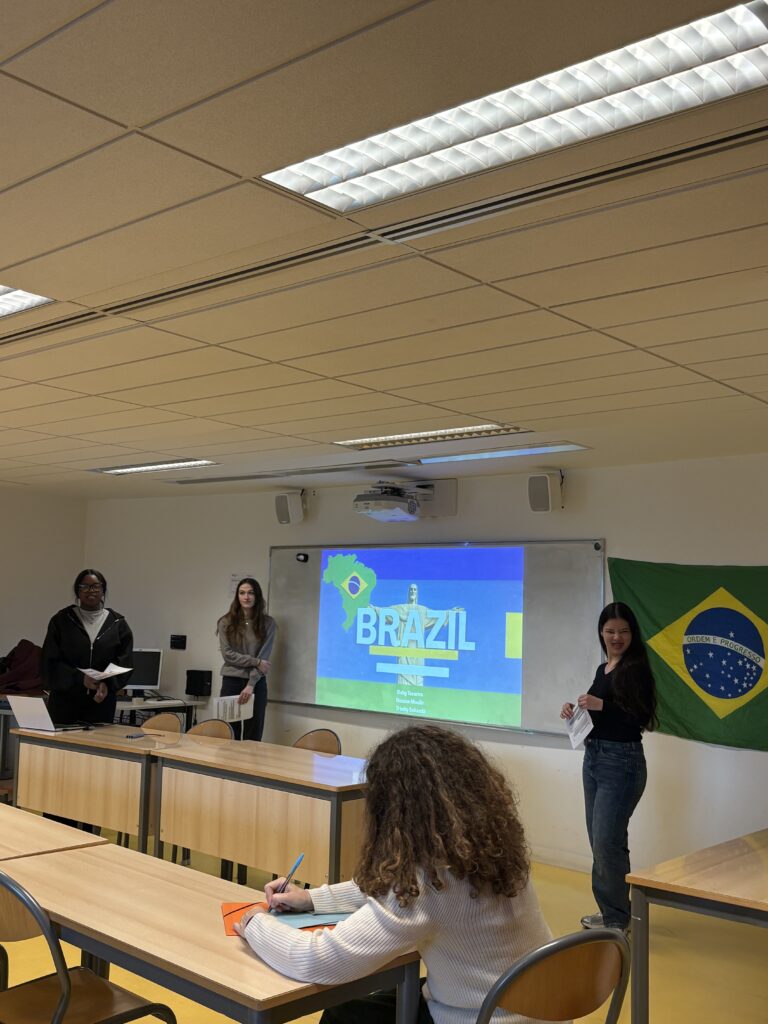
Several teams were formed to represent countries across different categories: developed countries, Category A developing countries, and Category B developing countries. The selected countries were Japan, New Zealand, Russia, Brazil, Singapore, Mexico, Argentina, Nigeria, and the United Arab Emirates.
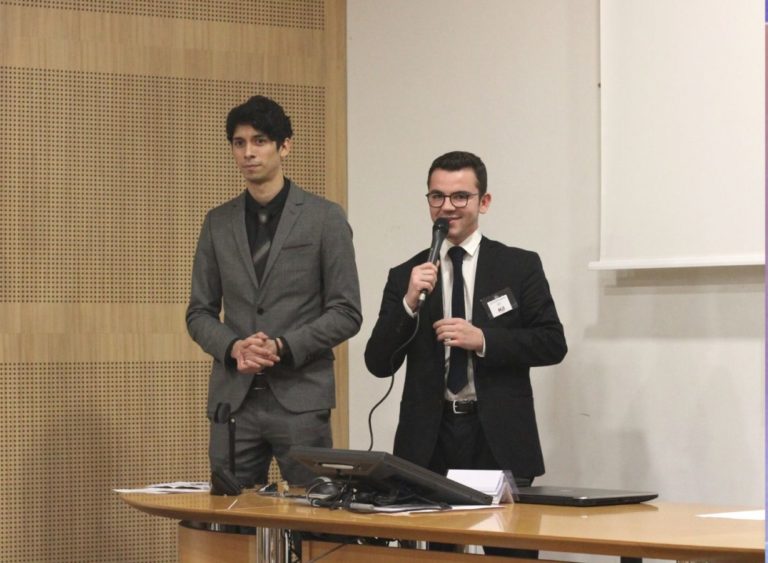
In this presentation, the students provided specific information about the countries they represented, enabling their classmates to place them in their economic and political context. They then detailed each country’s greenhouse gas emissions, their medium- and long-term emissions-reduction targets, and the measures to be implemented to achieve their ecological transition, which is often closely tied to their energy transition. The students also examined climate-modeling tools such as the Kaya Identity, which brings together the main technological, economic, and social factors that determine a country’s greenhouse gas emissions.
Here is a relevant example illustrating the evolution of greenhouse gas emissions in Russia between 1990 and 2022:
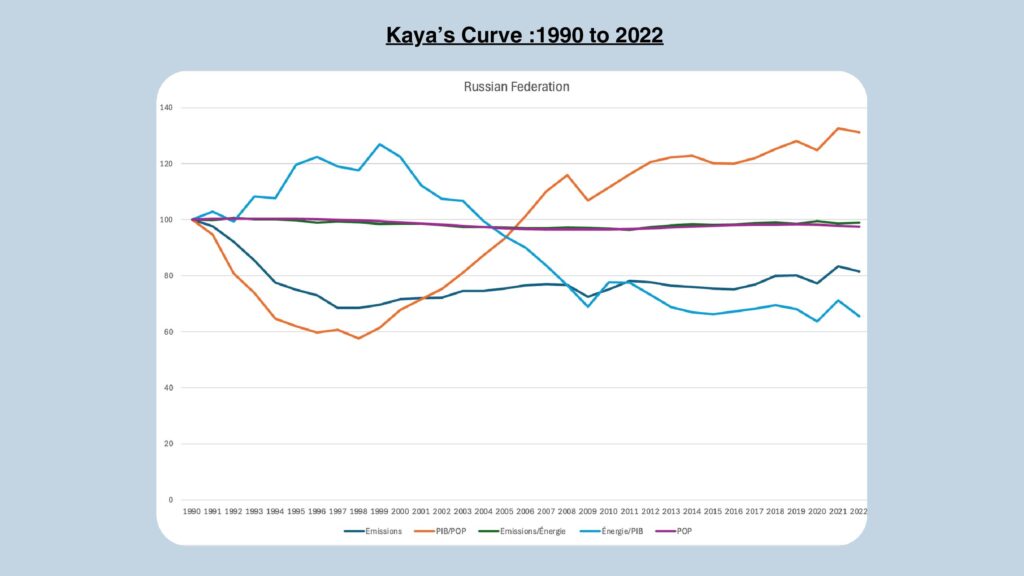
A series of calculations was carried out to obtain such a curve. It can be observed that at the time of the Soviet Union’s dissolution, economic activity collapsed, which logically led to a decrease in CO₂ emissions. In contrast, energy use surged.
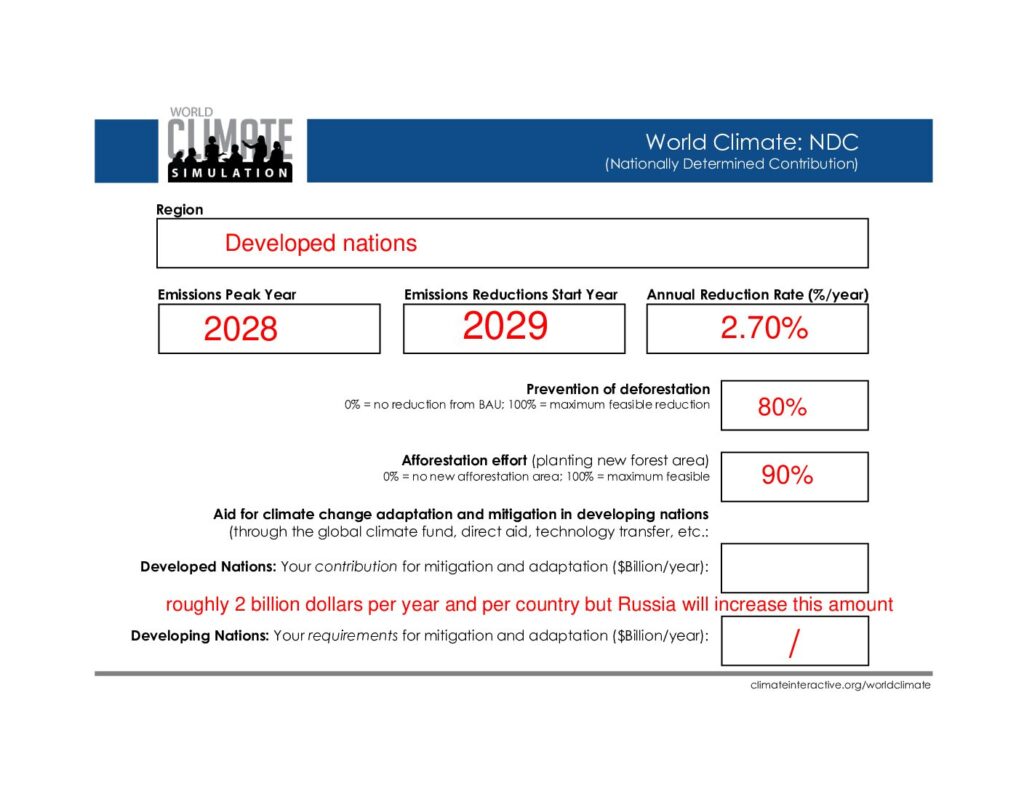
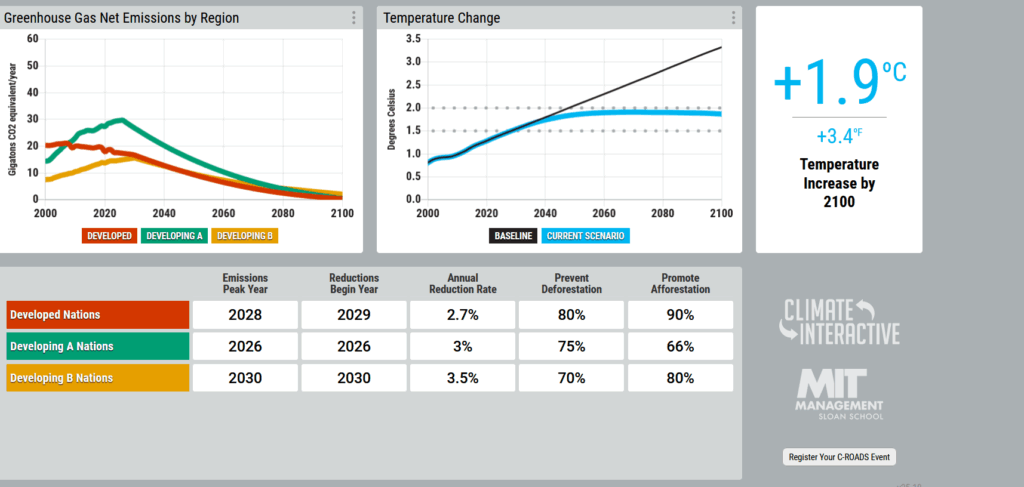
Subsequently, each country met with its counterparts within the same category to negotiate three points: the reduction of greenhouse gas emissions, the issue of deforestation/afforestation, and the financing of a $300 billion per year fund, provided by developed countries to developing countries to support their ecological transition.
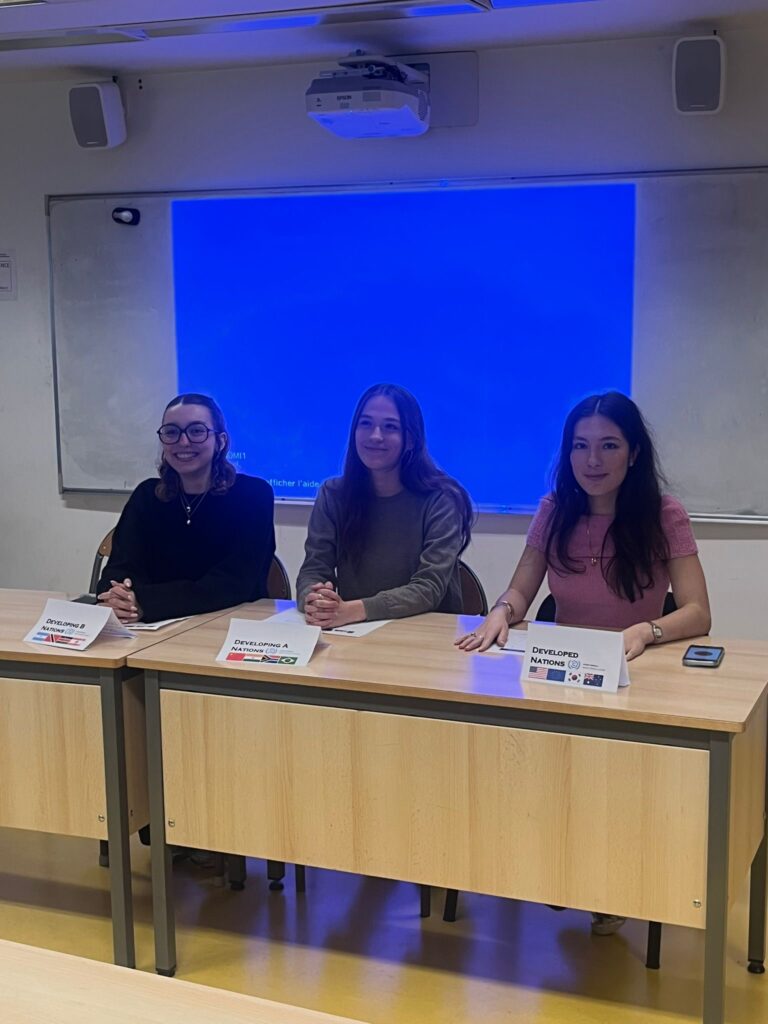
During this regional report, a form was presented including the date at which CO₂ emissions are expected to peak, the date when they will begin to decrease gradually each year, the associated annual reduction percentage, the potential reduction percentage from deforestation and reforestation programs, as well as the amount of financial aid provided by developed-country delegations to developing countries and the developing countries’ own financial requests from developed countries.
These negotiations were conducted seriously, taking into account the vital interests of each country, as if we were truly present at the conference.
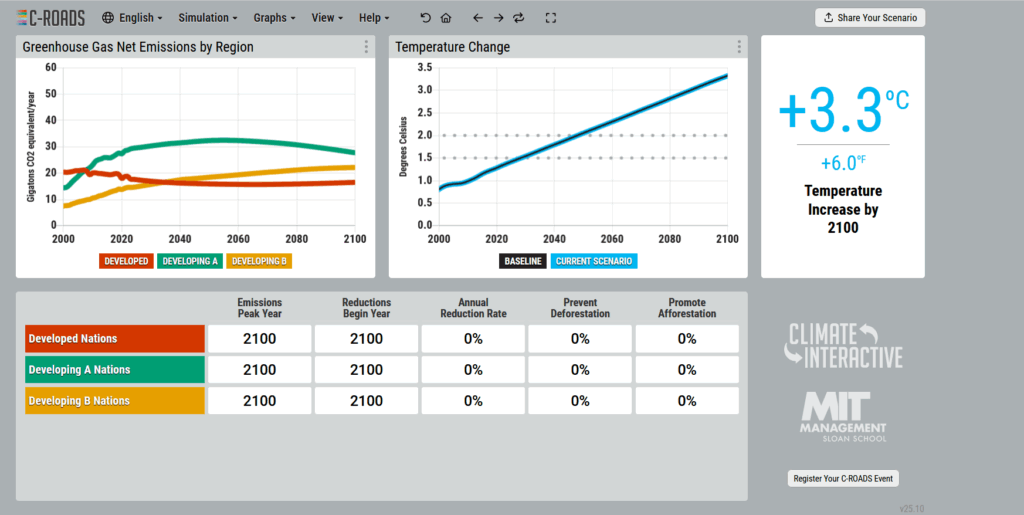
All these data, along with those from the other blocs, were entered into a simulator called C‑ROADS, which shows that the planet’s warming could currently reach 3.3°C by 2100, creating living conditions that would make survival difficult for humans, wildlife, and plant life.
However, our negotiations made it possible to reduce this temperature to 1.9°C by 2100.
Even though, as students and individuals, we do not hold significant influence in political negotiations at the COPs, this university event allowed us to become more aware of the climate crisis and the urgency it represents for the future of human and animal life on Earth.
We would like to thank Mrs. Bénédicte Coestier for her successful and engaging courses, as well as for her overall commitment related to this event.